
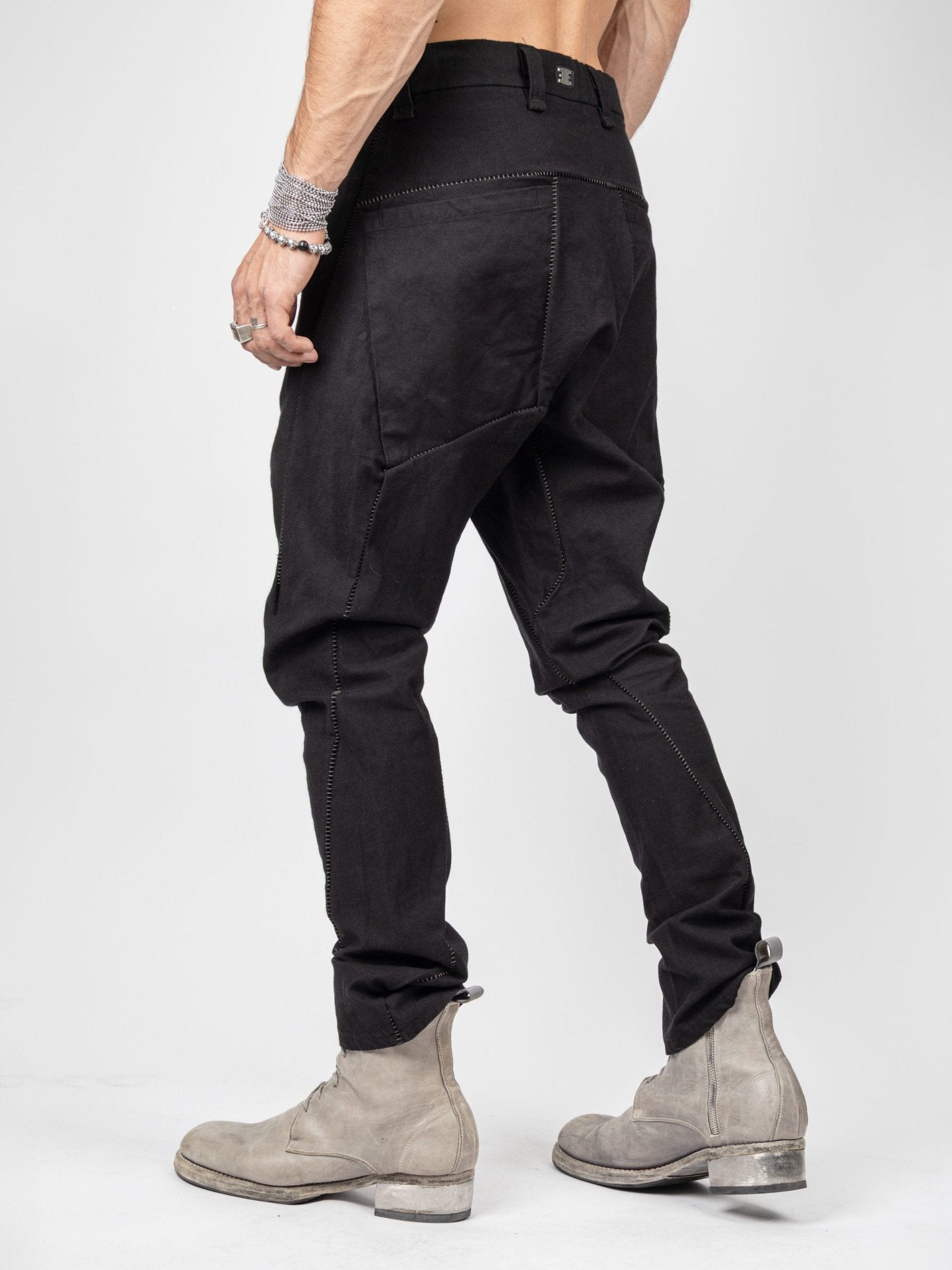
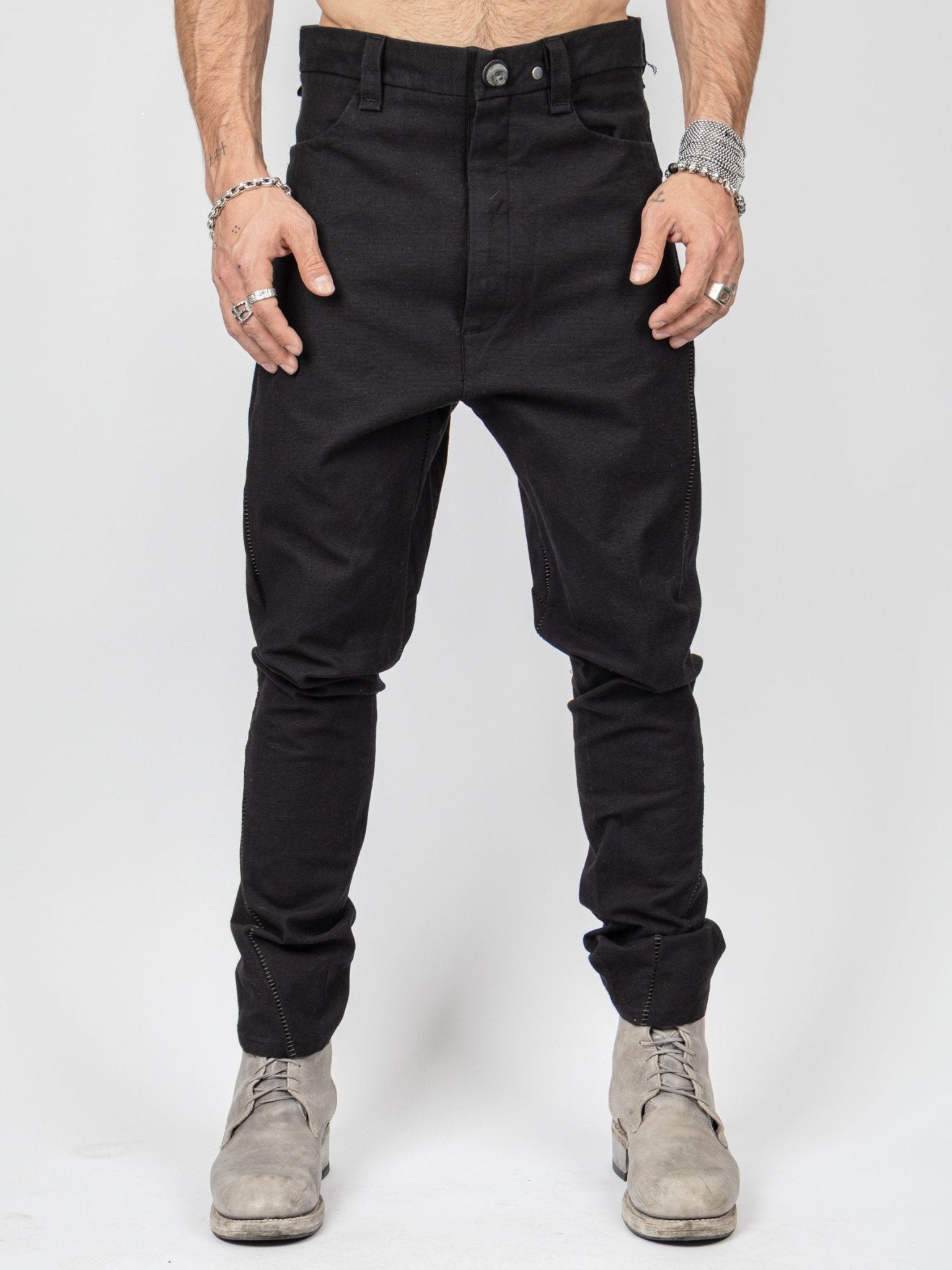
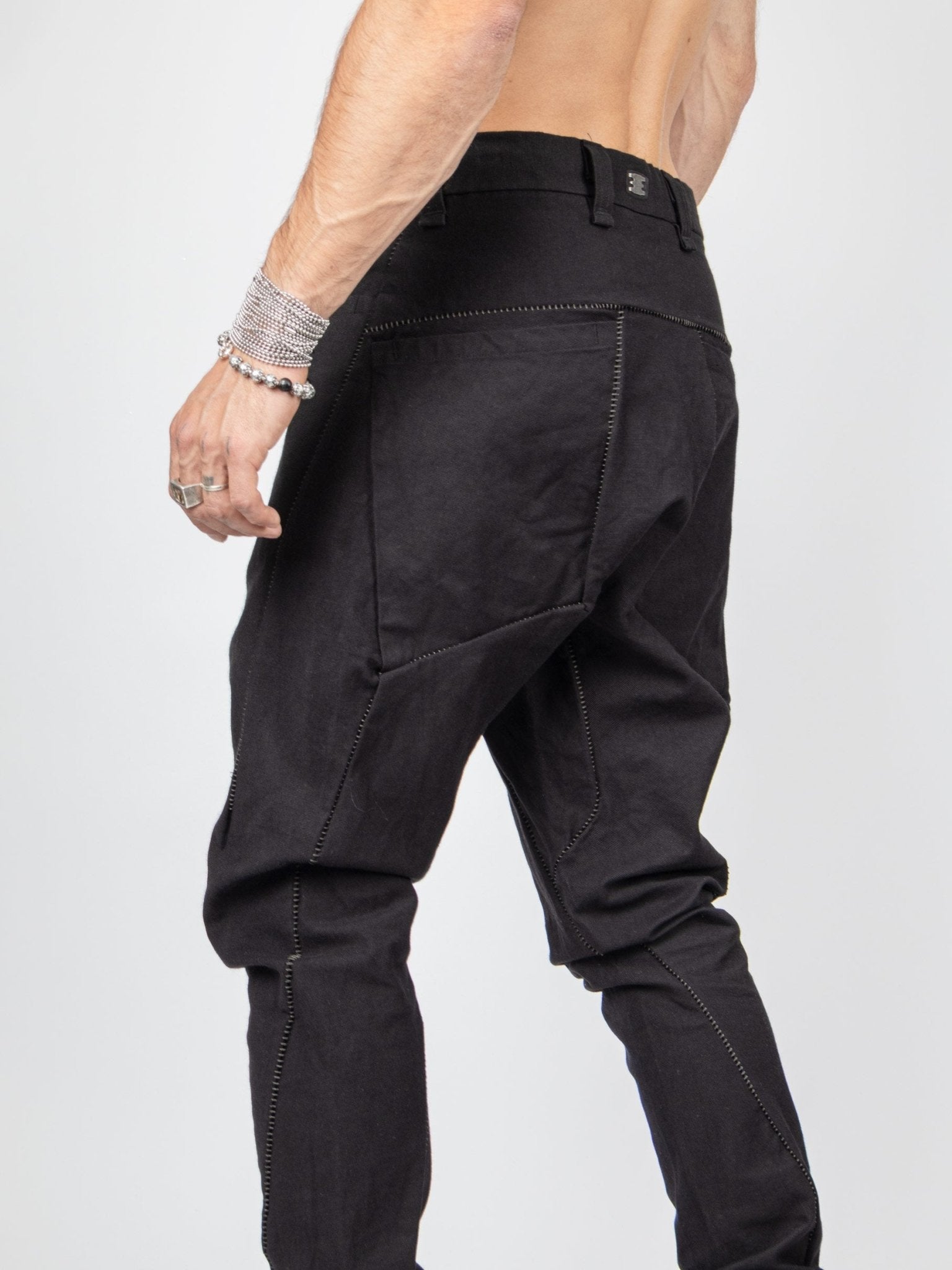
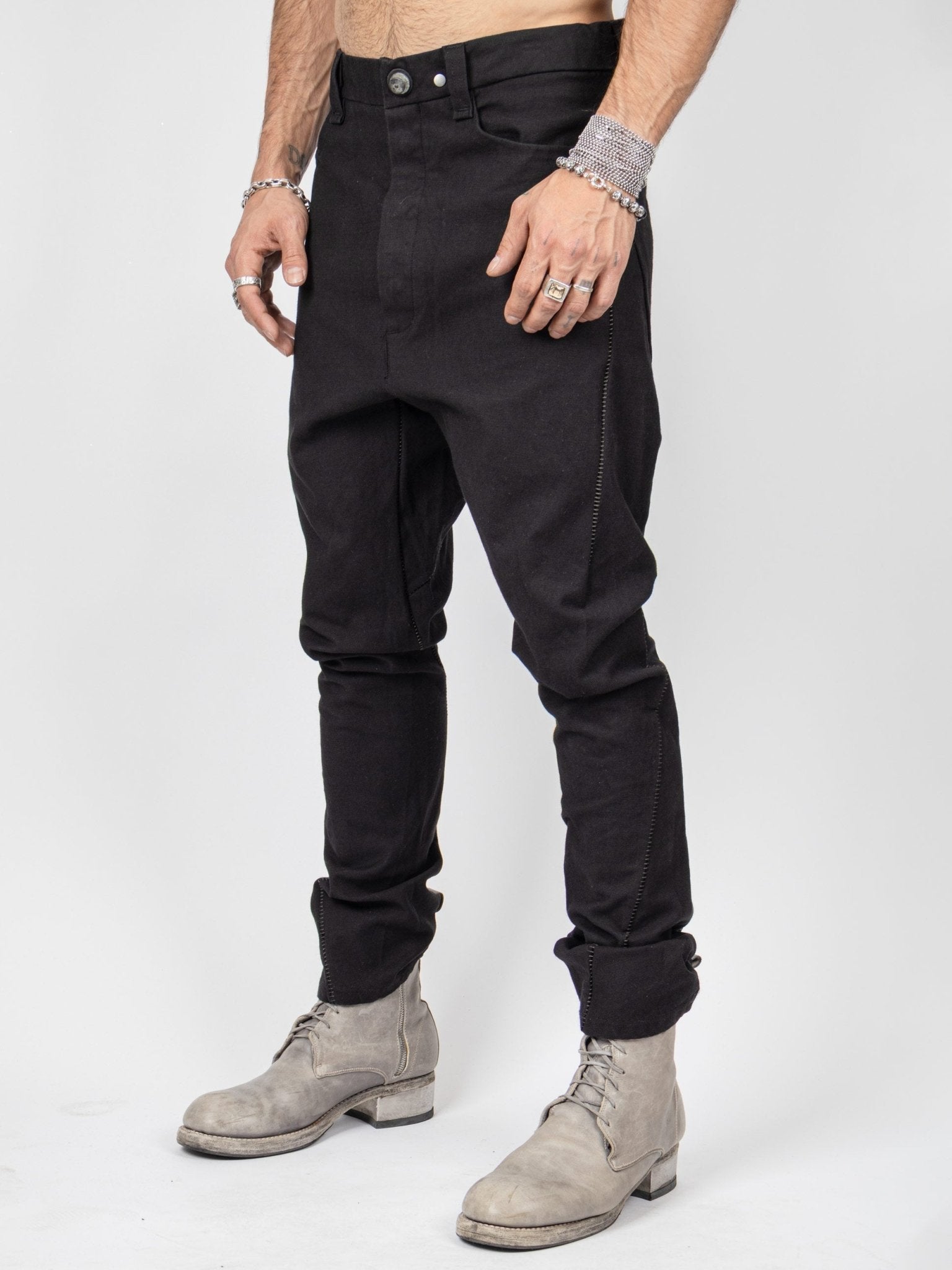
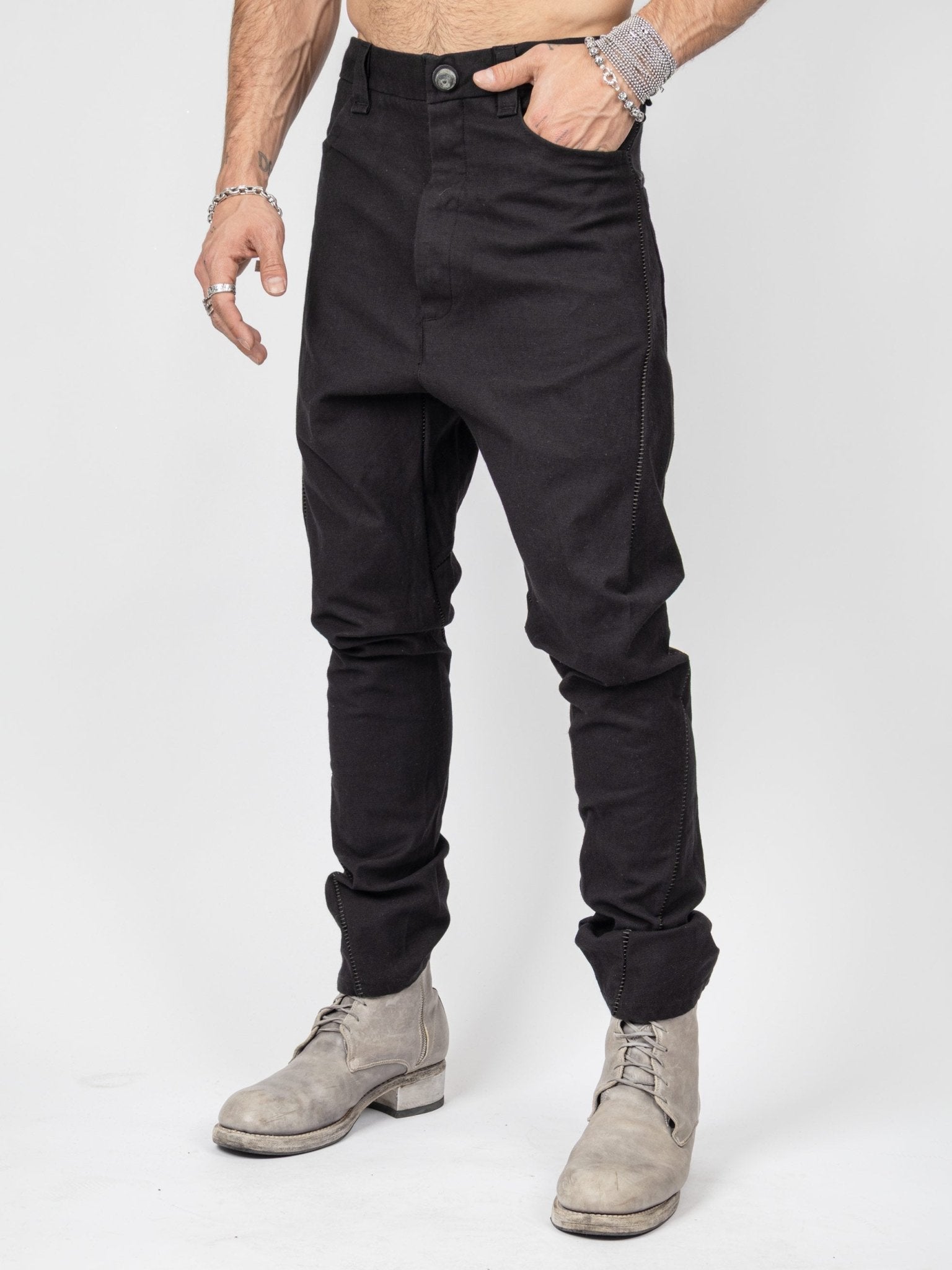
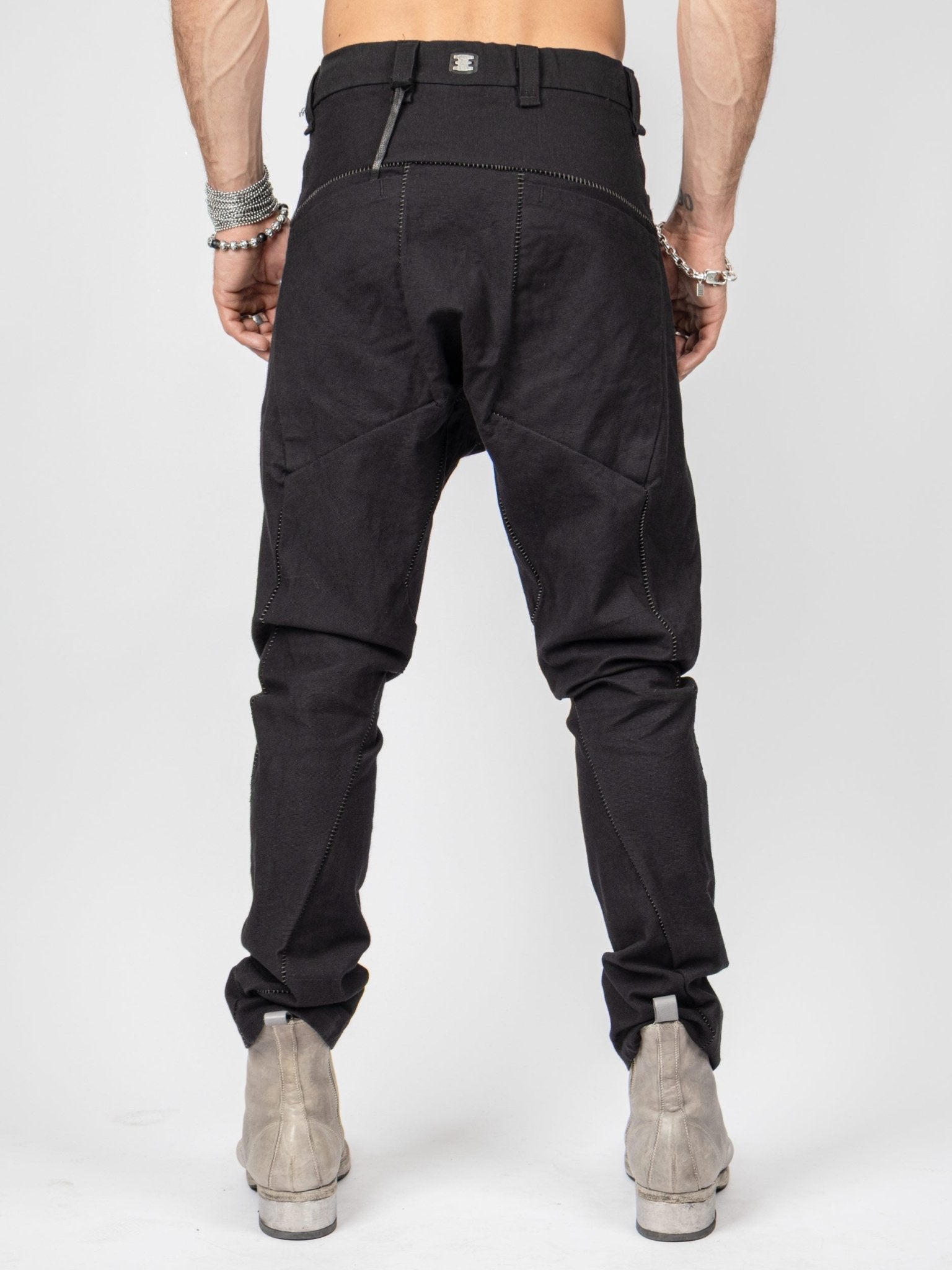
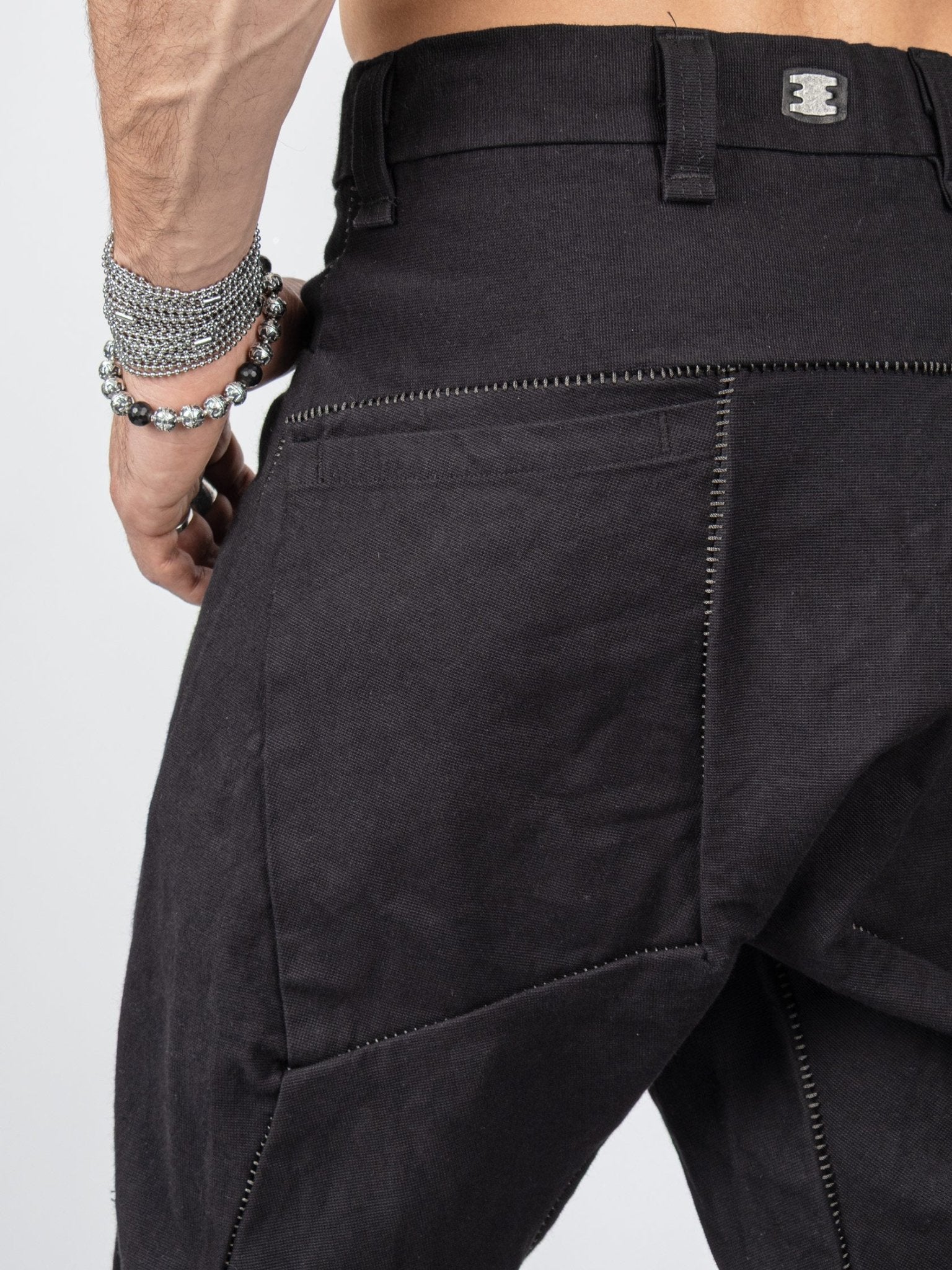
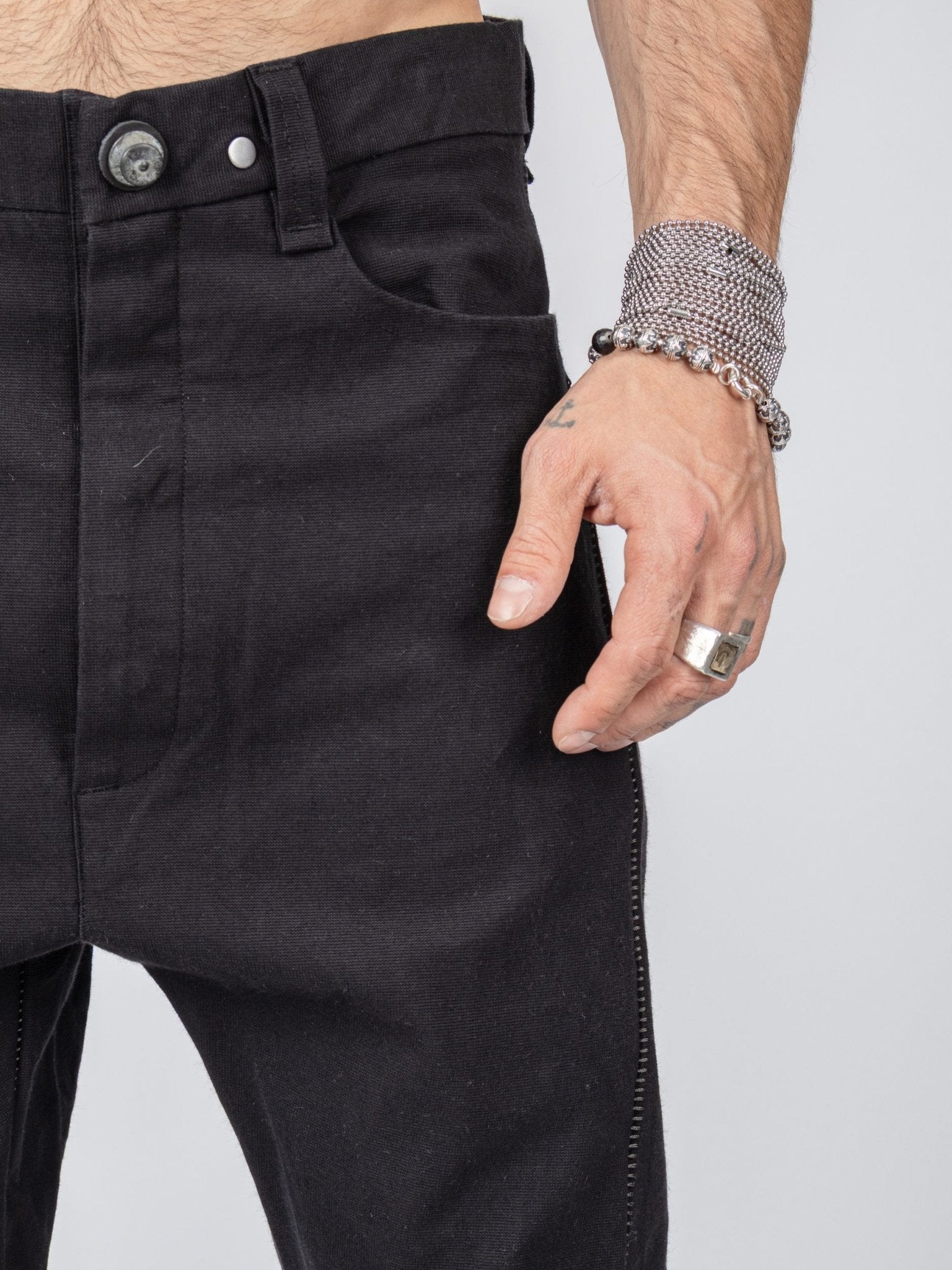
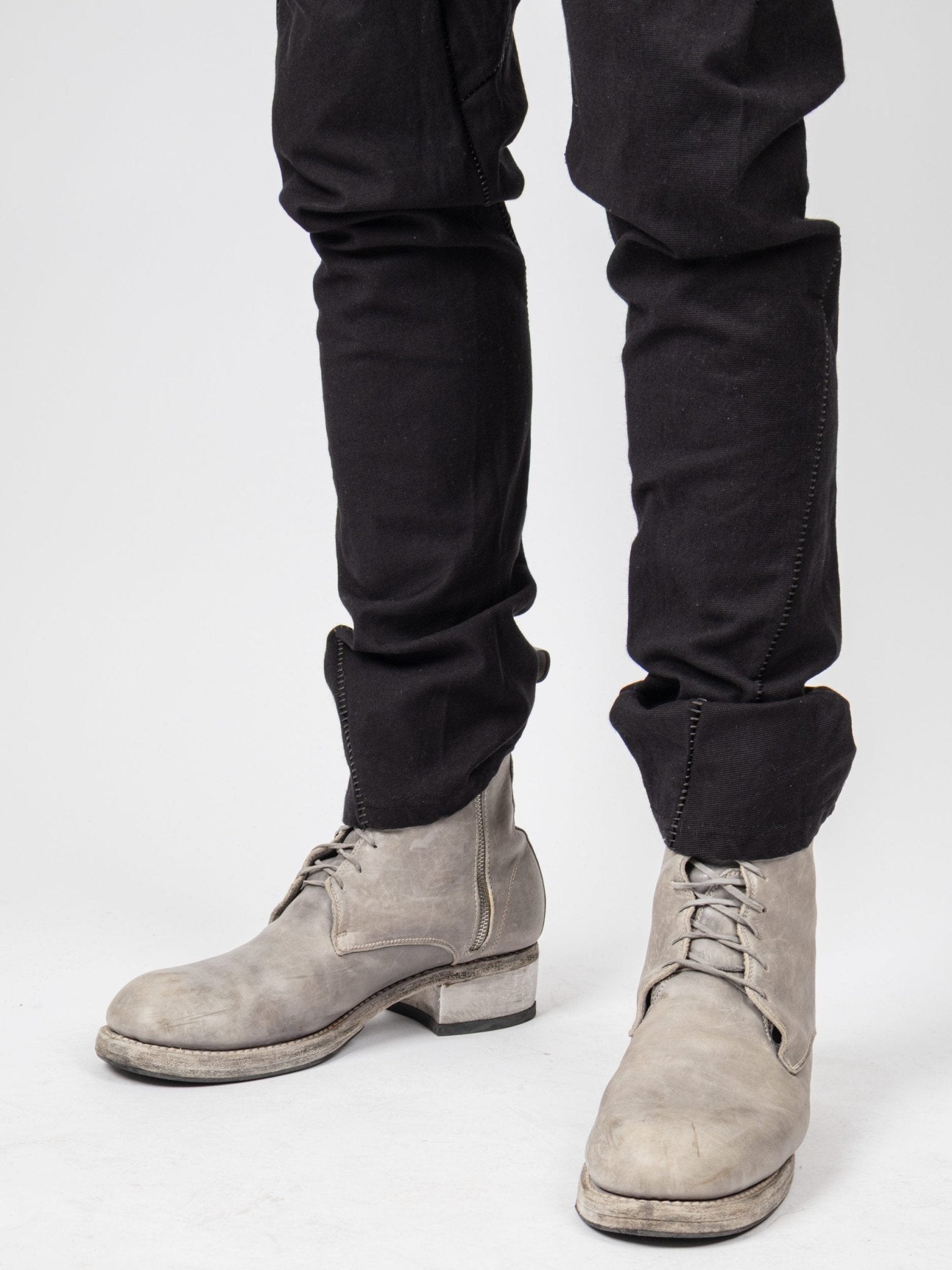
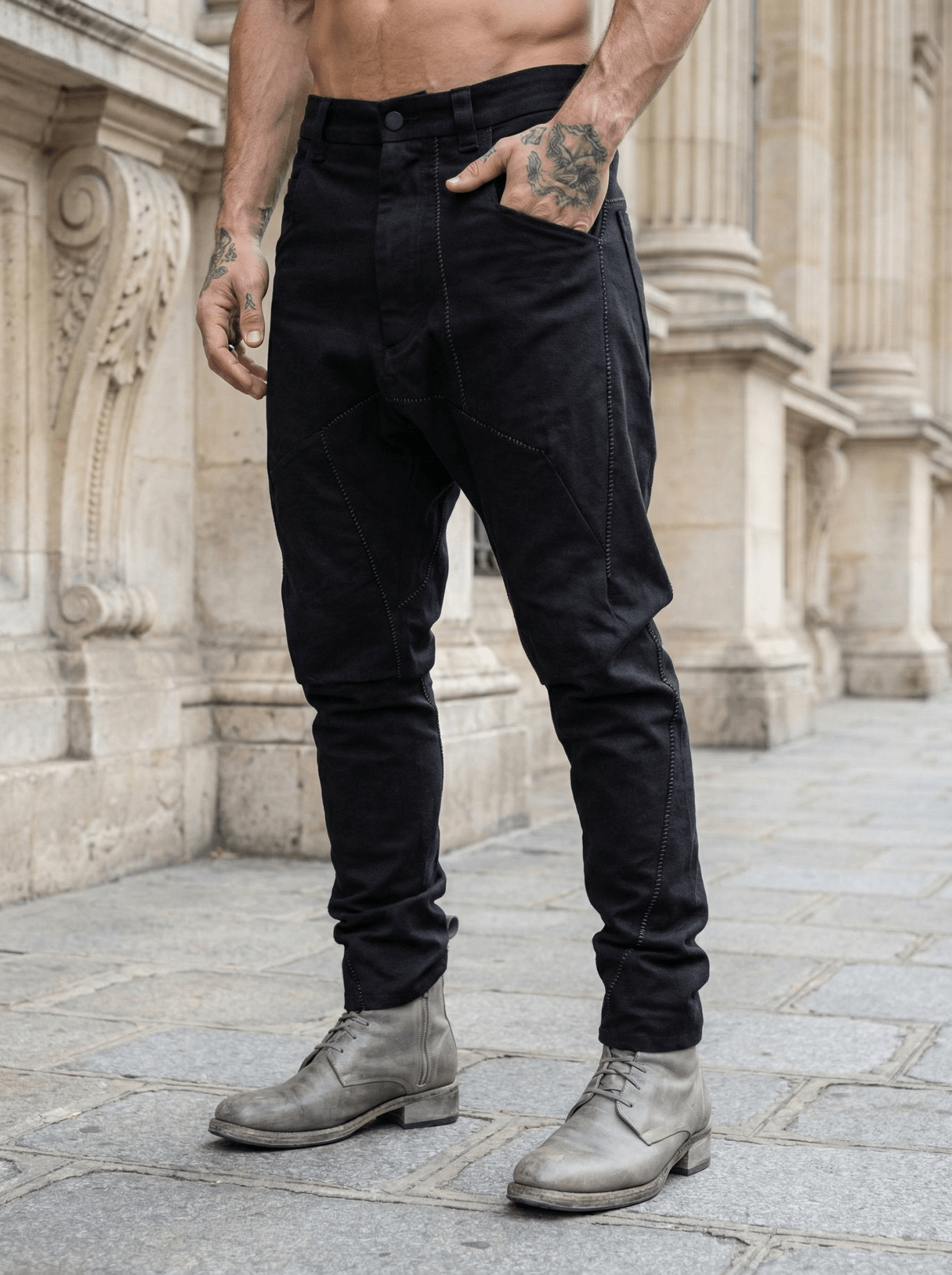
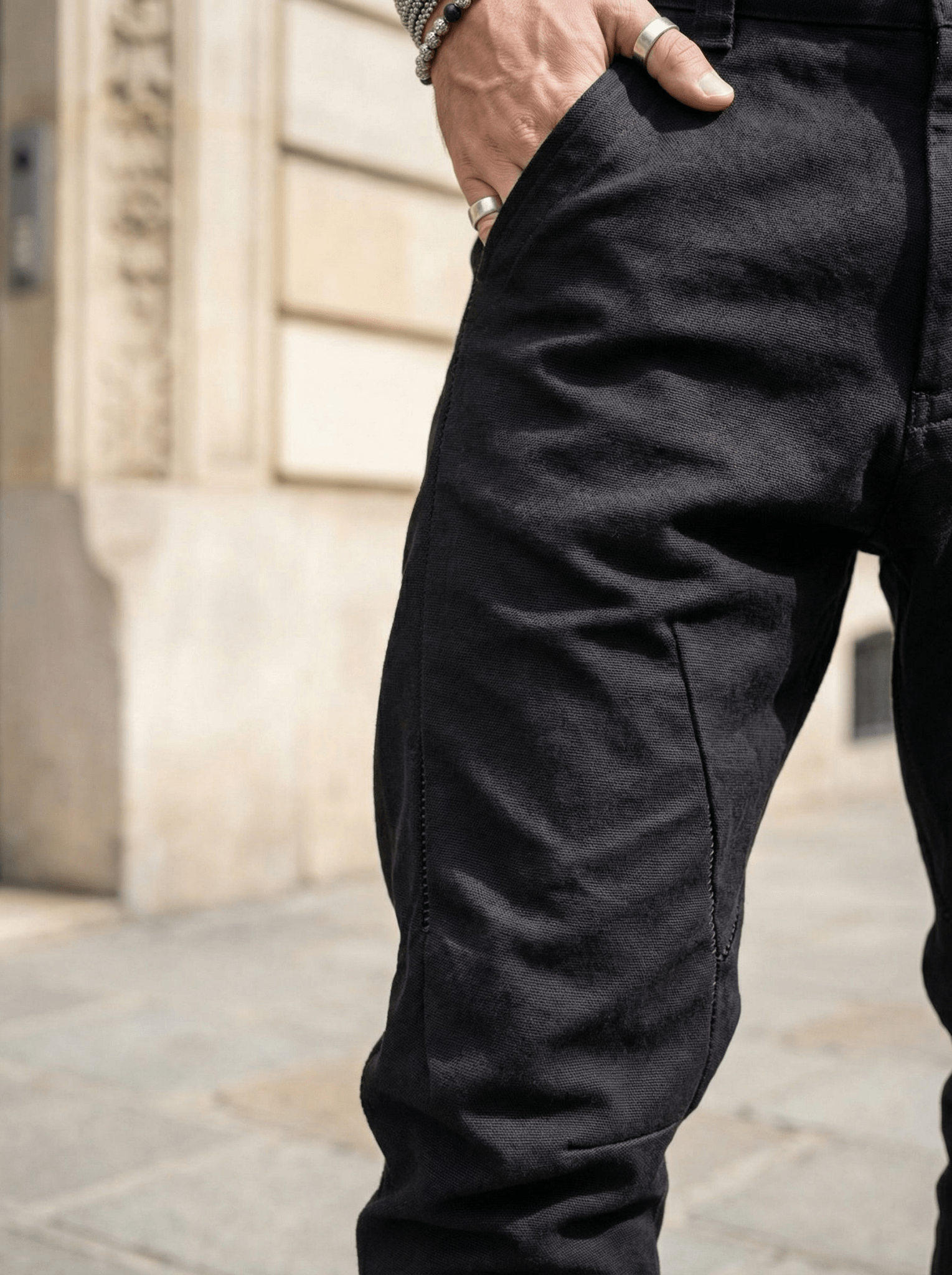
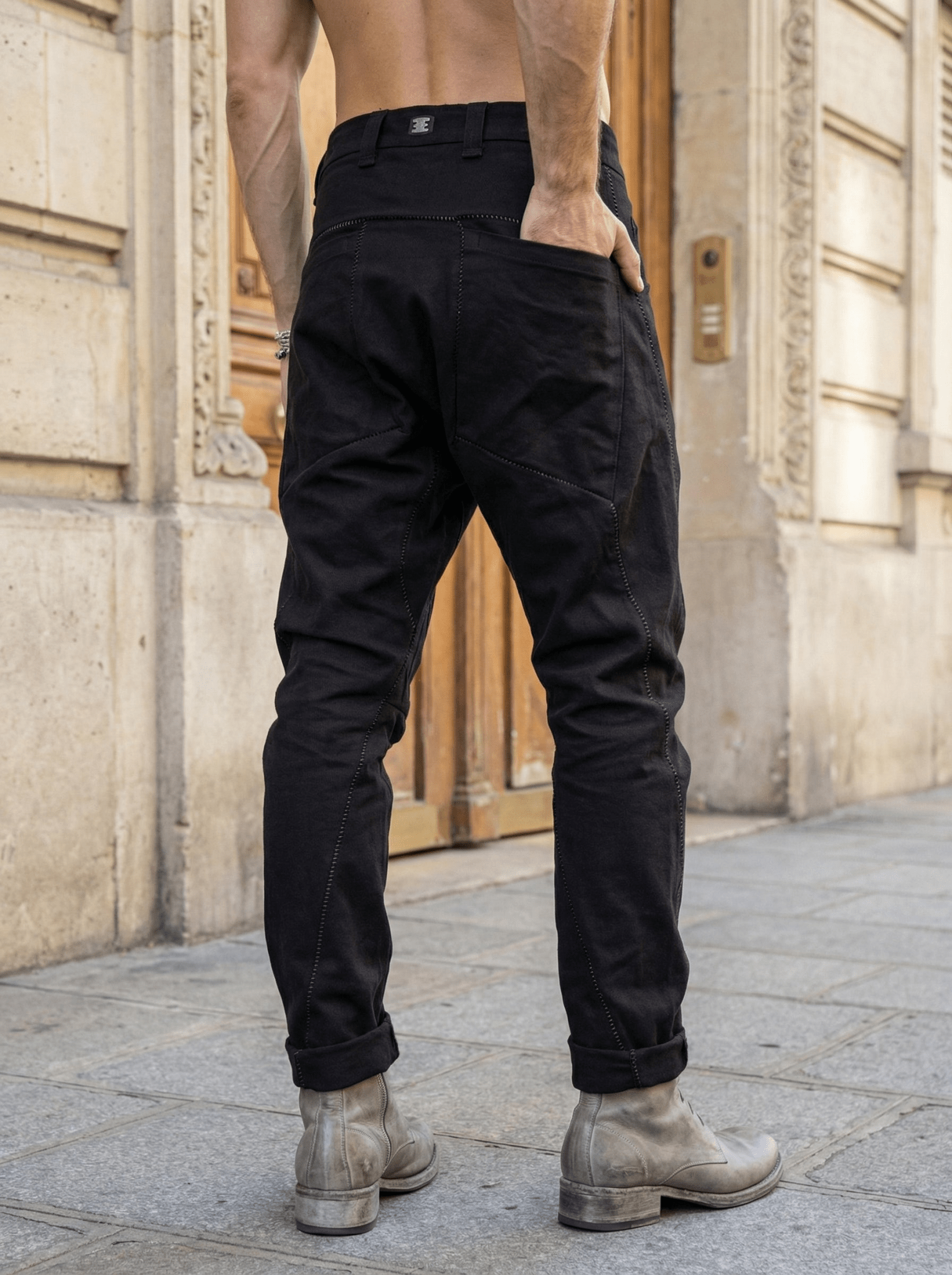
The "69" sub-line is Sellam's translation problem, solved. Two decades of industrial-construction language - built on lambskin and horse leather - is carried into cotton through the cloth itself. Armure weave is a structurally complex interlocking pattern that gives the cotton a surface density and subtle ridge far removed from standard twill or plain weave. Then the garment is cold dyed after construction, not before - meaning the pigment reaches seam folds, pocket edges, and flat panels at different rates. The result is a black that is not one black. Creases read darker, open planes read slightly lighter, and the dimensional depth that Sellam normally engineers through wet-molded leather is here achieved through dye chemistry and weave geometry alone.
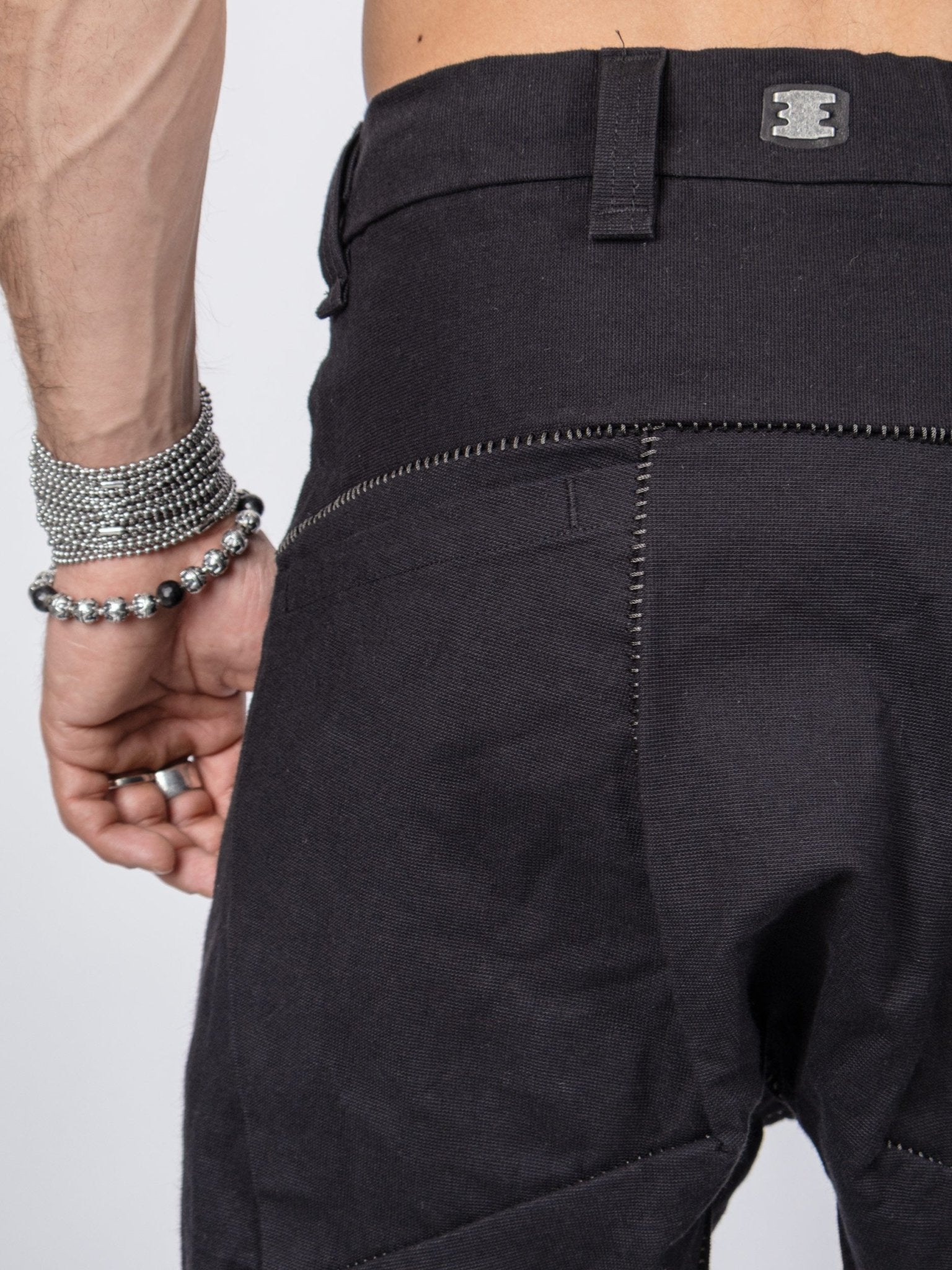
Leather trim at the back pocket keeps the signature material present - a tactile shift from the ridged cotton surface to something smoother, warmer against the fingertips. The silhouette is relaxed and dropped at the crotch, falling from the body rather than mapping it, a deliberate departure from the anatomical closeness of the mainline leather work. The 3% elasthane is not a comfort concession - it is a construction decision, allowing the armure weave to hold its structured face through movement without pulling at the seams. At the back, a gunmetal staple stamped "69" - cold to the touch, slightly proud of the surface. The bridge between lines.